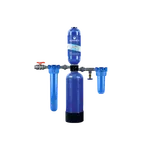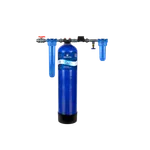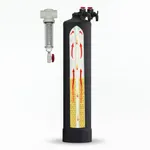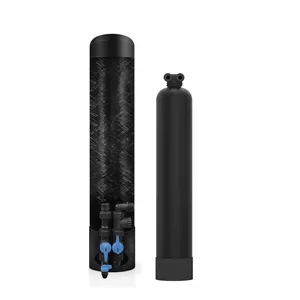
LCR specs
| Brand | SpringWell |
|---|---|
| Service flow rate | 8 GPM |
| Media capacity | 100,000 gal |
| Filter media | Ultra-dense 2-stage carbon block; rated 99.95% lead reduction plus cysts |
| Filter life | 100,000 gal per cartridge set |
| Certifications | Components certified to NSF/ANSI 53; Rated 99.95% lead reduction (per maker) |
| Best for water type | City (municipal) water |
| Warranty | Lifetime on tank and housings |
| Annual filter cost | ~$400/yr (estimate) |
| Price | $$$ Premium (~$1,300–$2,200) — ~$1,544. See Amazon for today's price. |
- The ~$400/yr cartridge cost is the highest upkeep in our guide — price it into your decision.
Specs are compiled from manufacturer listings and may change between production runs. Confirm on the retailer page before buying.
The SpringWell LCR is the lead specialist of this guide: an ultra-dense 2-stage carbon block system rated by the maker at 99.95% lead reduction plus cyst reduction, with NSF/ANSI 53 component certification. Per the maker’s spec sheet: 8 GPM, 100,000-gallon capacity, lifetime tank warranty, ~$1,544 upfront — and ~$400 per year in cartridges. The one-line verdict: the best pick for lead concerns — purpose-built for old pipes and confirmed lead, with the highest annual cartridge cost in this guide as the honest trade-off.
Who the SpringWell LCR is for (and who should skip it)
Buy it if you have confirmed lead — old service lines, a utility report showing lead, or your own test results. This is the system in the guide built specifically for that problem, with a quantified 99.95% reduction claim and NSF/ANSI 53 components behind it.
Skip it if you haven’t tested — $400 per year in cartridges is too much to spend on a suspicion. Skip it if lead isn’t your problem: for general city water, the SpringWell CF1 costs a fraction to run. And if you want whole-system lead/PFAS certification, the Aquasana HealthShield is the stronger paper trail.
Filtration performance
Per the maker’s spec sheet: ultra-dense 2-stage carbon block, 99.95% lead reduction, plus cyst reduction. The certification status is NSF/ANSI 53 at the component level — meaningful, since 53 is the standard covering lead and cysts, but component-level rather than whole-system. That’s the same tier as the CF1’s component certs, and a step below the HealthShield’s whole-system WQA certification. For a lead-specific purchase, the quantified 99.95% claim plus 53 components is a defensible basis — just know exactly what tier of evidence you’re buying.
Flow rate and pressure
Rated 8 GPM — the dense carbon block that makes lead reduction possible also constrains flow versus the 9–15 GPM systems here. Fine for 1–3 bath homes; larger households should check the flow sizer carefully, since this is the system where flow is most likely to be the binding constraint.
Installation and maintenance
Main-line install like the other tank systems; SpringWell’s lifetime tank warranty applies. Maintenance is the story: cartridges rated for 100,000 gallons at roughly $400 per year. That’s more than ten times the CF1’s upkeep — the cost of the ultra-dense media. Budget for it as a fixed annual line item, not an afterthought.
Cost of ownership
Upfront ~$1,544 plus about $400 per year in cartridges: five-year ownership lands near ~$3,544 before installation — the second-highest total here after the HealthShield. Nobody buys the LCR to save money; you buy it because lead is confirmed and the 99.95% claim with NSF/ANSI 53 components is the evidence you want.
Check the current price on Amazon — ~$1,544 is approximate, so check the current price before you buy.
Ownership math and close alternatives
The SpringWell LCR typically sells for ~$1,544–$1,544. With ~$100/year upkeep, five-year ownership lands near ~$2,044 plus installation. The media is rated for lead/cyst media rated for several years of typical use, and it’s backed by a lifetime warranty on tank and housings.
At 8 GPM it fits most 1–4 bathroom homes; if your peak demand is higher, size up rather than hope — an undersized system drops pressure when showers, laundry, and irrigation run together.
If this one isn’t quite right: the Aquasana HealthShield broader certified contaminant coverage including PFAS; the Express Water Heavy Metal 3-Stage a budget cartridge route to heavy-metal reduction. Our 2026 roundup lines up all 12 systems side by side, and our how-to-choose guide walks through the five decisions that matter most.
Worth confirming first: your main water line diameter, since these systems are designed around 1-inch plumbing and downsizing costs you flow rate; whether you want a bypass loop installed (recommended — it keeps water running during filter changes); and physical space near the main shutoff. Get these right and installation is straightforward.