Rhino EQ-1000 specs
| Brand | Aquasana |
|---|---|
| Service flow rate | 7 GPM (up to 14.6 peak) |
| Media capacity | 1,000,000 gal |
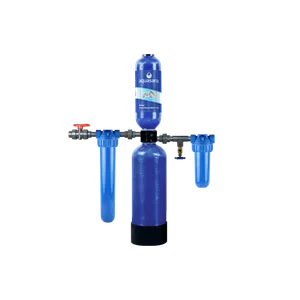
| Filter media | Carbon + KDF + catalytic carbon dual-tank system with sediment pre-filter and 0.35-micron post-filter |
| Filter life | 1,000,000 gal (~10 yrs); pre/post filters every 2–6 mo |
| Certifications | NSF/ANSI 42 certified (97% chlorine reduction, 1M gal); Tank WQA certified to NSF/ANSI 61 (material safety) |
| Best for water type | City (municipal) water |
| Warranty | 10-year limited warranty; 90-day guarantee |
| Annual filter cost | ~$120/yr (estimate) |
| Price | $$ Mid-range (~$600–$1,300) — ~$999–$1,998. See Amazon for today's price. |
- Street price swings widely with promotions — listed here from about $999 on sale to about $1,998 at list.
Specs are compiled from manufacturer listings and may change between production runs. Confirm on the retailer page before buying.
The Aquasana Rhino EQ-1000 pairs a carbon + KDF dual-tank system with a 0.35-micron post-filter, and its standout credential is system-level certification: per the maker’s spec sheet, it’s NSF/ANSI 42 certified with 97% chlorine reduction, with the tank WQA certified to NSF/ANSI 61. Flow is rated 7 GPM (14.6 peak) with 1,000,000 gallons of media capacity, and the price swings between ~$999 and ~$1,998 depending on bundle. The one-line verdict: the best certified chlorine-reduction pick — buy it when you want independent proof your chlorine is actually gone.
Who the Aquasana Rhino EQ-1000 is for (and who should skip it)
Buy it if chlorine taste or odor is your main complaint and you want certified — not claimed — reduction. The dual-tank design suits mid-size homes, and the 0.35-micron post-filter adds a physical filtration stage most carbon systems skip.
Skip it if you’re chasing PFAS or lead — this system’s certifications don’t cover them. Skip it too if frequent filter swaps annoy you: pre/post filters every 2–6 months is more maintenance than a SpringWell CF1. Budget shoppers should look at the iSpring WGB32B instead.
Filtration performance
Per the maker’s spec sheet: carbon + KDF media in a dual-tank layout, finished with a 0.35-micron post-filter. The certification profile is the selling point — NSF/ANSI 42 certified as a system for 97% chlorine reduction, with the tank WQA certified to NSF/ANSI 61. That “system certified” wording matters: the finished unit’s chlorine performance was tested, unlike component-level certs on the SpringWell CF1 or maker-only claims on budget systems. It’s not a PFAS or lead system, though — see our best whole house filters roundup for how the certifications map to contaminants.
Flow rate and pressure
Rated 7 GPM service with 14.6 GPM peak, the Rhino sits between the CF1’s 9 and the HealthShield’s 6. It suits typical 2–4 bath homes; if you’re regularly pushing peak draws, verify with the flow sizer.
Installation and maintenance
Main-line install, and as a dual-tank plus post-filter setup it’s a bit more involved than a single tank — most owners go pro. Maintenance is the recurring consideration: pre- and post-filters swap every 2–6 months at about $120 per year, while the tank media runs to 1,000,000 gallons. Aquasana backs it with a 10-year warranty.
Cost of ownership
Pricing swings: ~$999–$1,998 depending on bundle (UV/conditioner options drive the spread). Add roughly $120 per year for pre/post filters, so five-year ownership lands somewhere between ~$1,599 and ~$2,598 before installation. Shop the exact bundle you need — the range is wide enough that like-for-like comparison matters.
Check the current price on Amazon — pricing swings between ~$999 and ~$1,998 by bundle, so check the current price before you buy.
Ownership math and close alternatives
The Aquasana Rhino EQ-1000 typically sells for ~$999–$1,998. With ~$120/year upkeep, five-year ownership lands near ~$1,599 plus installation. The media is rated for 10 years or 1,000,000 gallons for the main tank, and it’s backed by a 10-year limited warranty with a 90-day guarantee.
The 7 GPM rating covers 1–3 bathroom homes with typical simultaneous use. Whole-house pressure also depends on your plumbing and incoming pressure, so run your numbers through our flow sizer before committing.
If this one isn’t quite right: the SpringWell CF1 lower yearly upkeep and a lifetime warranty; the iSpring WGB32B a budget cartridge system for similar city-water coverage. Our 2026 roundup lines up all 12 systems side by side, and our how-to-choose guide walks through the five decisions that matter most.
Worth confirming first: your main water line diameter, since these systems are designed around 1-inch plumbing and downsizing costs you flow rate; whether you want a bypass loop installed (recommended — it keeps water running during filter changes); and physical space near the main shutoff. Get these right and installation is straightforward.