E-1000 specs
| Brand | Kind Water |
|---|---|
| Service flow rate | 15 GPM |
| Media capacity | 100,000 gal |
| Filter media | High-surface-area carbon block + washable 20-inch pleated sediment filter; optional salt-free softener module |
| Filter life | ~100,000 gal; cartridges roughly yearly |
| Certifications | Components certified NSF/ANSI 61 and 372 (lead-free); CSA B483.1 compliant |
| Best for water type | City or well water |
| Warranty | Limited lifetime warranty |
| Annual filter cost | ~$180/yr (estimate) |
| Price | $$ Mid-range (~$600–$1,300) — ~$770–$976. See Amazon for today's price. |
- Maker-direct pricing moves often; seen from about $770 on sale to $976 list in 2026.
Specs are compiled from manufacturer listings and may change between production runs. Confirm on the retailer page before buying.
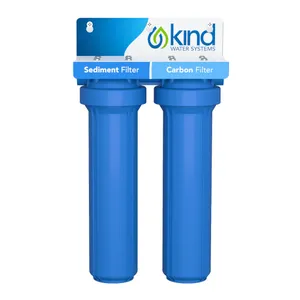
The Kind Water E-1000 is a carbon block whole house filter with a washable pleated sediment pre-filter, an optional salt-free softener module, and a design pitch built around DIY installation and portability. Per the maker’s spec sheet: 15 GPM flow for 1–6 baths, ~100,000 gallons of capacity, and NSF 61/372 component certifications. The one-line verdict: the best DIY-install, portable pick — for renters, confident DIYers, and anyone who wants a high-flow system they can take with them.
Who the Kind E-1000 is for (and who should skip it)
Buy it if you want a whole-house filter without calling a plumber, or if portability matters — renters and frequent movers can uninstall and take it along. It’s also a reasonable fit for larger homes given the 15 GPM rating.
Skip it if you need certified contaminant reduction — component-level NSF 61/372 is a materials-safety claim, not a performance certification. Skip it if you want long media life: ~100,000 gallons is modest next to million-gallon tanks like the SpringWell CF1. And if scale is your real problem, the Pelican PSE2000 pairs filtration with a third-party-tested conditioner.
Filtration performance
The stack: washable pleated sediment filter, then carbon block. Per the maker’s spec sheet it targets chlorine, tastes, and odors, with the optional salt-free softener module conditioning against scale. Certification is component-level (NSF 61/372) — meaning the materials are certified safe for contact with drinking water, which is not a claim about what the system reduces. Be precise about that when comparing against certified systems in our best whole house filters guide.
Flow rate and pressure
15 GPM is generous and covers 1–6 baths on paper. The washable pleated pre-filter helps here — a clogged sediment stage is what usually drags flow down, and being able to wash it instead of replace it keeps pressure up between services.
Installation and maintenance
This is the E-1000’s differentiator: it’s designed for DIY installation and portability. Maintenance means washing the pleated sediment filter and replacing the carbon block at about $180 per year. A limited lifetime warranty backs the unit. If you’re a renter, confirm with your landlord before touching the main line — portable doesn’t mean permission-free.
Cost of ownership
Upfront runs about ~$770–$976, with replacement media around $180 per year. Five-year ownership lands near ~$1,670–$1,876 before installation (which you may skip if you DIY). That’s mid-pack: cheaper to buy than premium tanks, but the annual media cost is higher than the CF1’s ~$35.
Check the current price on Amazon — ~$770–$976 is approximate, so check the current price before you buy.
Ownership math and close alternatives
The Kind Water E-1000 typically sells for ~$770–$976. With ~$100/year upkeep, five-year ownership lands near ~$1,270 plus installation. The media is rated for media rated for several years; sediment cartridge every 6–12 months, and it’s backed by a limited lifetime warranty.
The 15 GPM rating covers larger homes and 4+ bathroom households with heavy simultaneous use. Whole-house pressure also depends on your plumbing and incoming pressure, so run your numbers through our flow sizer before committing.
If this one isn’t quite right: the SpringWell CF1 a true set-and-forget tank with decade-long media; the Pelican PSE2000 adds salt-free scale conditioning in the same cabinet. Our 2026 roundup lines up all 12 systems side by side, and our how-to-choose guide walks through the five decisions that matter most.
Before you buy: confirm your main line’s pipe size (most whole-house systems expect 1-inch inlet/outlet — adapters exist, but they cost flow), plan a bypass loop so you still have water during maintenance, and check you have floor space plus a nearby drain if the system backwashes. These three checks prevent the most common install-day surprises.
Featured in our guides
- Best Whole House Water Filters 2026: 12 Systems Compared
- Salt-Free Softener vs Water Filter: What Each One Actually Does
- What Size Whole House Water Filter Do I Need? The GPM Guide